BPC-157 and TB-500 are two research peptides that frequently appear together in laboratory catalogues and experimental designs. Many research teams examine them in related models, which has led to growing interest in studying the two compounds side by side.
This article explains, in clear terms, why these peptides are commonly researched together, what each one is typically studied for, and what laboratories usually consider when sourcing them for experimental work.
What Is BPC-157?
BPC-157 is a synthetic pentadecapeptide. In laboratory and preclinical research, it is often studied in models linked to tissue signalling and cellular response mechanisms.
Researchers typically investigate BPC-157 in relation to:
- Tissue signalling pathways
- Vascular biology
- Cellular communication processes
- Biochemical response models
Because of this focus, BPC-157 has become one of the more widely discussed research peptides in these areas. It is supplied strictly for laboratory research use only.
What Is TB-500?
TB-500 is a synthetic peptide fragment related to thymosin beta-4. Research interest in TB-500 usually centres on cell behaviour and structural biology questions.
Common research themes include:
- Actin-binding and cell migration studies
- Tissue-related biochemical pathways
- Cellular organisation models
- Cytoskeletal research questions
Like BPC-157, TB-500 is intended only for controlled laboratory and preclinical research. It is not a medicine and is not for human or veterinary use.
Why Are BPC-157 and TB-500 Studied Together?
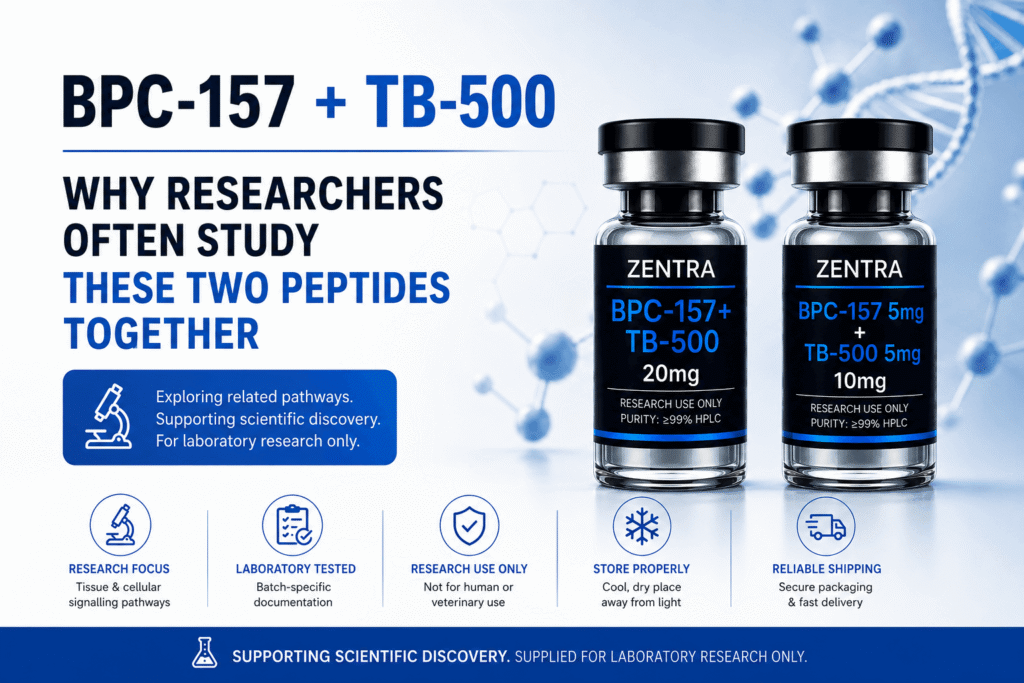
Researchers sometimes include both peptides in the same experimental framework because their research areas overlap. This does not mean the two compounds work in exactly the same way. It simply reflects shared scientific interest in related biological processes.
Common reasons for studying them together include:
- Complementary focus on tissue and cellular signalling
- Interest in comparative pathway studies
- Practical convenience when both compounds are relevant to the same research question
- The ability to explore related mechanisms within one experimental series
Some laboratories source a combined research blend for convenience, while others prefer separate vials. The choice depends on the experimental design.
View the BPC-157 + TB-500 research blend
Sourcing Considerations for Laboratory Use
When sourcing BPC-157, TB-500 or a combined research blend, laboratories typically look for:
- Clear research-use-only designation
- Batch-specific documentation or Certificates of Analysis (COA)
- Independent laboratory testing where available
- Clear storage and handling guidance
- Reliable shipping practices
Independent laboratory testing and batch-specific documentation can help researchers verify the identity and analytical characteristics of materials used in experimental work. It is good practice to review the available documentation for the specific batch rather than relying only on general product claims.
Storage and Handling Notes
Most research peptides in this class are supplied as lyophilised powders. General laboratory practice often includes storing unopened vials in a cool, dry place away from light and reconstituting according to institutional protocols.
Storage and reconstitution requirements can vary by peptide and by batch. Researchers should always refer to the product-specific or batch-specific documentation supplied with the material, and follow their own laboratory protocols.
Research Use Only
BPC-157 and TB-500 are supplied strictly for laboratory research and analytical purposes. They are not intended for human consumption, medical use, therapeutic use, diagnostic use, or veterinary use.
Purchasers are responsible for ensuring that their work complies with all applicable institutional guidelines and regulations.
Final Notes
BPC-157 and TB-500 continue to attract research interest, both individually and in combination. Understanding why they are often studied together helps research teams design clearer experimental protocols.
When sourcing either compound, prioritising batch-specific documentation, independent laboratory testing where available, clear storage guidance, and research-use-only status supports better experimental control.
Zentra Labs is a UK-based supplier of research peptides for laboratory use. Batch-specific documentation is available to support research teams reviewing the materials they order.