Research peptides are sensitive materials. Temperature, moisture, light and handling all influence how well they remain stable from the moment they leave the supplier until they are used at the laboratory bench.
This article explains the practical role of cold-chain storage for research peptides. It covers why temperature control matters, what laboratories typically do on arrival, and how documentation supports good sample management. All guidance is intended strictly for research use only.
Why Temperature Control Matters
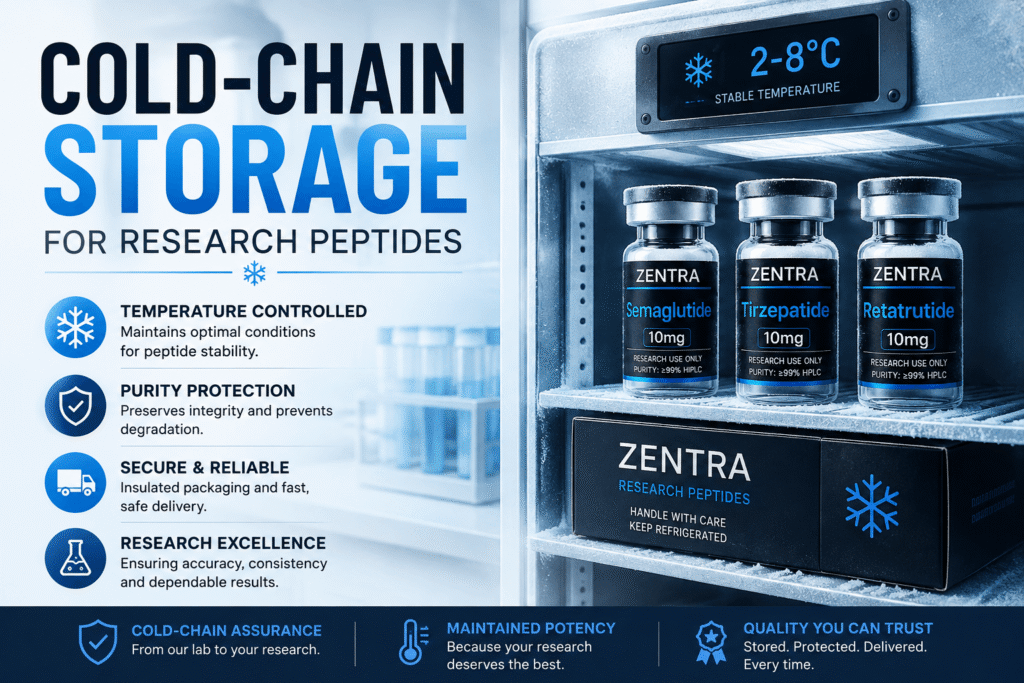
Most research peptides are supplied as lyophilised powders. In this form they are relatively stable when kept cool, dry and protected from light. However, exposure to heat, humidity or repeated temperature changes can increase the risk of degradation.
Once a peptide is reconstituted, it generally becomes more sensitive. Refrigerated storage is usually recommended, and repeated freeze-thaw cycles are best avoided.
Cold-chain thinking is therefore relevant at several stages:
- During storage at the supplier
- During packing and dispatch
- During transit to the laboratory
- During storage after arrival
- After reconstitution
Lyophilised vs Reconstituted Material
Understanding the difference between the two forms helps laboratories manage risk more effectively.
Lyophilised peptides are freeze-dried. They are typically more stable and can often be stored at refrigerator or freezer temperatures for extended periods when kept dry and protected from light.
Reconstituted peptides have been dissolved in a solvent such as bacteriostatic water. In this form they are usually less stable. Most laboratories refrigerate reconstituted solutions and aim to use them within a defined period according to their own protocols.
Clear labelling of both forms reduces the chance of handling mistakes.
Related reading: Bacteriostatic Water vs Sterile Water for peptide reconstitution
What Good Cold-Chain Practice Looks Like
There is no single universal standard that applies to every research peptide. However, several practical habits are widely used in laboratory settings:
- Store unopened lyophilised vials in a cool, dry place away from direct light
- Follow any temperature guidance provided with the product or batch
- Minimise the time materials spend outside controlled storage
- Label reconstituted vials with the date and contents
- Avoid repeated freeze-thaw cycles
Because storage requirements can vary by peptide, researchers should always refer to the product-specific or batch-specific documentation supplied with the material, and follow institutional laboratory protocols.
What to Do When a Delivery Arrives
On arrival, laboratories often carry out simple checks:
- Inspect packaging for damage
- Confirm the product and batch details match the order
- Transfer vials to appropriate storage promptly
- Retain any included documentation for laboratory records
Prompt transfer into controlled storage is one of the simplest ways to protect the material after delivery.
Documentation and Traceability
Good sample management is not only about temperature. Documentation also plays a role.
Researchers typically benefit from:
- Clear research-use-only labelling
- Batch-specific documentation or Certificates of Analysis where available
- Storage guidance provided with the product
- Independent laboratory testing information where available
Independent laboratory testing and batch-specific documentation can help researchers verify the identity and analytical characteristics of materials used in experimental work. Keeping batch records alongside storage logs supports better traceability inside the laboratory.
Common Risks to Avoid
Several simple mistakes can undermine otherwise good storage practice:
- Leaving lyophilised vials at room temperature for long periods
- Exposing materials to direct sunlight or high humidity
- Repeatedly freezing and thawing reconstituted solutions
- Failing to label reconstituted vials with the date
- Mixing different batches without clear records
Research Use Only
All research peptides discussed in the context of cold-chain storage are intended strictly for laboratory research and analytical purposes. They are not intended for human consumption, medical use, therapeutic use, diagnostic use, or veterinary use.
Researchers remain responsible for following institutional guidelines and applicable regulations when handling these materials.
Final Notes
Cold-chain storage is a practical tool for protecting research peptides from unnecessary degradation. Temperature control, careful handling, clear labelling and good documentation all contribute to more reliable experimental starting materials.
By treating storage as part of the overall research process, laboratories can reduce avoidable variability and maintain better control from delivery through to the bench.
Zentra Labs is a UK-based supplier of research peptides for laboratory use. Batch-specific documentation is available to support research teams reviewing the materials they order. Explore the shop